Energy, Openness & Cohesion
The three traits that decide who rises and who falls.
What it says
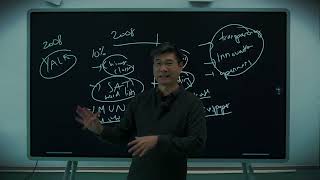
Jiang's claim is that three traits, not resources, decide who wins: energy (the will to work hard, focus, a clear goal), openness (willingness to learn, adapt, and admit mistakes — humility plus resilience), and cohesion (seeing yourself as part of a community and sacrificing for it — his rendering of Ibn Khaldun's asabiyyah). All three are highest when a people is poor and struggling, and all three decay as wealth brings inequality and corruption: energy curdles into "just getting by," openness into arrogance and insularity, cohesion into atomization. The diagnostic: find who is most energetic, open and cohesive, find which empire is most corrupt, insular and divided, and you know who conquers whom.
Why success destroys the three traits
When a society begins poor, Jiang argues, it has all three traits in abundance — it has to, to survive. Success brings wealth; wealth brings inequality and corruption; and those slowly drain energy, openness and cohesion until the society is rich, arrogant, divided — and ripe for defeat. A crucial refinement he adds: poverty does not guarantee the three traits ("just because you're poor does not mean you're open, energetic and cohesive"), and it usually takes a single leader — a general, a poet, or a prophet — to activate latent cohesion in a struggling people.
In Jiang's words
“These three metrics are energy, openness and cohesion. Energy means you want to work hard; openness means you're willing to admit you made a mistake; cohesion means you see yourself as part of a community.”— GT#2
“When a society begins, you have all three. But over time they decline — because there's more corruption, more inequality, more wealth.”— GT#2
“Just because you have the most resources or the most people does not mean you'll win. What matters is how energetic, open and resourceful your people are.”— GT#5
Where he applies it
- Why Finland's schools excel and a rich society's schools decay.
- Why he names Germany, Japan and Israel as future powers — humiliation forged their energy and cohesion.
- His blunt verdict that complacent winners “never come back.”
What it predicts
From this diagnostic Jiang forecasts:
- Defeated and marginalized peoples rise; complacent winners fall and do not recover.
- Germany, Japan and Israel become great powers of the coming era.
Tracked predictions from this framework
Live predictions on this site that this framework generated — their status updates automatically as events resolve.
Related frameworks
Watch the source lectures
This framework is one of several behind 450 tracked predictions — 22 already resolved.
← All frameworks