AI as God — The Holy Empire of Reason
The data-center boom, read as an attempt to build God — and rule through Him.
What it says
Jiang reads the AI build-out through what he calls the Holy Empire of Reason: a Deist, Masonic project (he quotes Albert Pike's Morals and Dogma) to subjugate the animal in man by reason and so achieve “the true, only empire.” Today's AI elite he reads as building their companies like cults — he points, for instance, to Peter Thiel's Zero to One (“every great business is built around a secret”) — and as favoring technocracy over democracy. The endgame he describes is a universal control grid: digital ID plus digital currency (which he equates with the biblical “mark of the beast”), justified by the claim that human subjectivity is the source of sin and that if everyone “thinks alike,” humanity becomes God.
From a religion of Reason to a machine god
The throughline, in Jiang's account, is Deism: God as a cosmic mathematician, the universe as a perfectible equation. If human subjectivity — the messy, sinful individual — is the flaw, then the cure is to make everyone think alike, and AI is the tool that can enforce that uniformity at planetary scale. He cites Brzezinski's 1970 Between Two Ages as a blueprint for a technocratic, post-democratic order managed through “persisting crisis,” mass media and a charismatic personality.
The control grid
What looks like a consumer-tech gold rush, Jiang argues, is really the wiring of a surveillance state: data centers as the nervous system, digital identity and digital currency as the leash. He explicitly links this to the Pax Judaica narrative — a “global AI surveillance system” — and forecasts a two-tier outcome: longevity and ascension for the elite, a programmable, monitored existence for everyone else.
In Jiang's words
“We want to turn society into a cube. In fact, we want to turn everyone into a cube. And how do we do so? Artificial intelligence.”— GT#26
“Freemasonry is the subjugation of the human that is in men by the divine — the conquest of the appetites and passions by the moral sense and reason… the true, only empire.”— GT#26 (quoting Albert Pike)
“Human subjectivity is bad because it leads to sin… if we all think alike, we now achieve God. And that's what AI can do for us.”— GT#26
“ChatGPT is not AI. Artificial intelligence is a thinking, conscious, sentient force — that's like God. So they're trying to create God.”— Secret History: Pax Judaica
“What they decided is a global AI surveillance system.”— Secret History: Pax Judaica
Where he applies it
- The global data-center build-out (“Operation Stargate”), reframed as surveillance infrastructure rather than consumer AI.
- Peter Thiel's Zero to One — “every great business is built around a secret” — which Jiang reads as cult- and conspiracy-building.
- Brzezinski's Between Two Ages (1970) read as a plan for technocratic, post-democratic management.
What it predicts
From this framework Jiang forecasts:
- A one-world, AI-administered order emerges (in the Pax Judaica telling, centered on Jerusalem).
- A universal digital-ID and digital-currency control grid — his reading of the “mark of the beast.”
- A two-tier transhuman future: longevity and ascension for elites, monitored servitude for everyone else.
Tracked predictions from this framework
Live predictions on this site that this framework generated — their status updates automatically as events resolve.
Related frameworks
Watch the source lectures
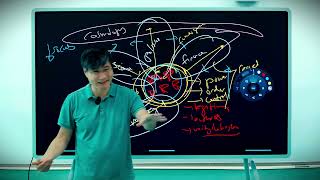
Game Theory #26
youtube.com/@PredictiveHistory
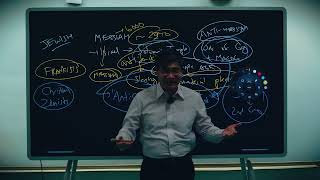
Secret History (Pax Judaica)
youtube.com/@PredictiveHistory
This framework is one of several behind 414 tracked predictions — 22 already resolved.
← All frameworks